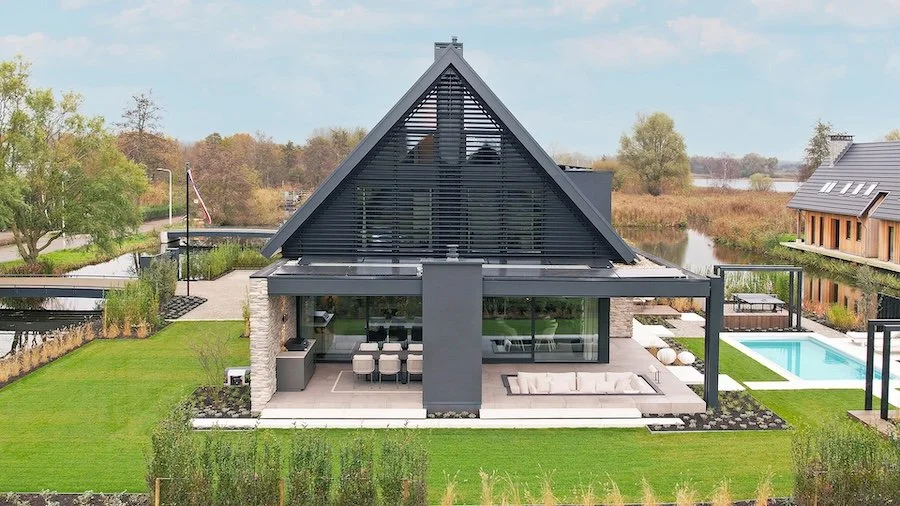
External louvres can provide shade, help manage solar heat gain, improve privacy and become an architectural feature in their own right. But once you have decided that external shading could work for your property, there is another question to answer:
Should you choose fixed, adjustable or sliding external louvres?
The right choice depends on your glazing, the direction your property faces, how much control you want over sunlight and privacy, and whether the louvres need to move completely away from a window or door.
In this guide, we compare the three main options and explain where each type works best.
Which type of external louvre is best?
Fixed louvres are a good choice where consistent shading or screening is required. Adjustable louvres offer greater control over sunlight, glare, heat and privacy, while sliding louvre panels are particularly suited to large windows and glazed doors where the shading may need to move completely out of the way.
There is no single system that is best for every property. The ideal solution should respond to the building, glazing and way the space is used.
If you are still exploring the options available, take a look at Sunshield’s [external louvre systems – link to Products page].
Fixed vs adjustable vs sliding louvres at a glance
| Feature | Fixed louvres | Adjustable louvres | Sliding louvre panels |
|---|---|---|---|
| Best for | Consistent shading and screening | Flexible control of light, heat and privacy | Large glazing, bifold and sliding doors |
| Blade position | Remains fixed | Blades can be tilted | Panels move horizontally; blades may also be adjustable |
| Light control | Consistent | High | High |
| Privacy control | Good | Excellent | Excellent |
| Can move away from glazing? | No | No | Yes |
| Motorisation available? | Not usually required | Depending on system | Depending on system |
| Architectural impact | High | High | High |
| Best where conditions change through the day? | Limited | Excellent | Excellent |
The best option may also vary between different elevations of the same building.
The best option may also vary between different elevations of the same building.
What are fixed external louvres?

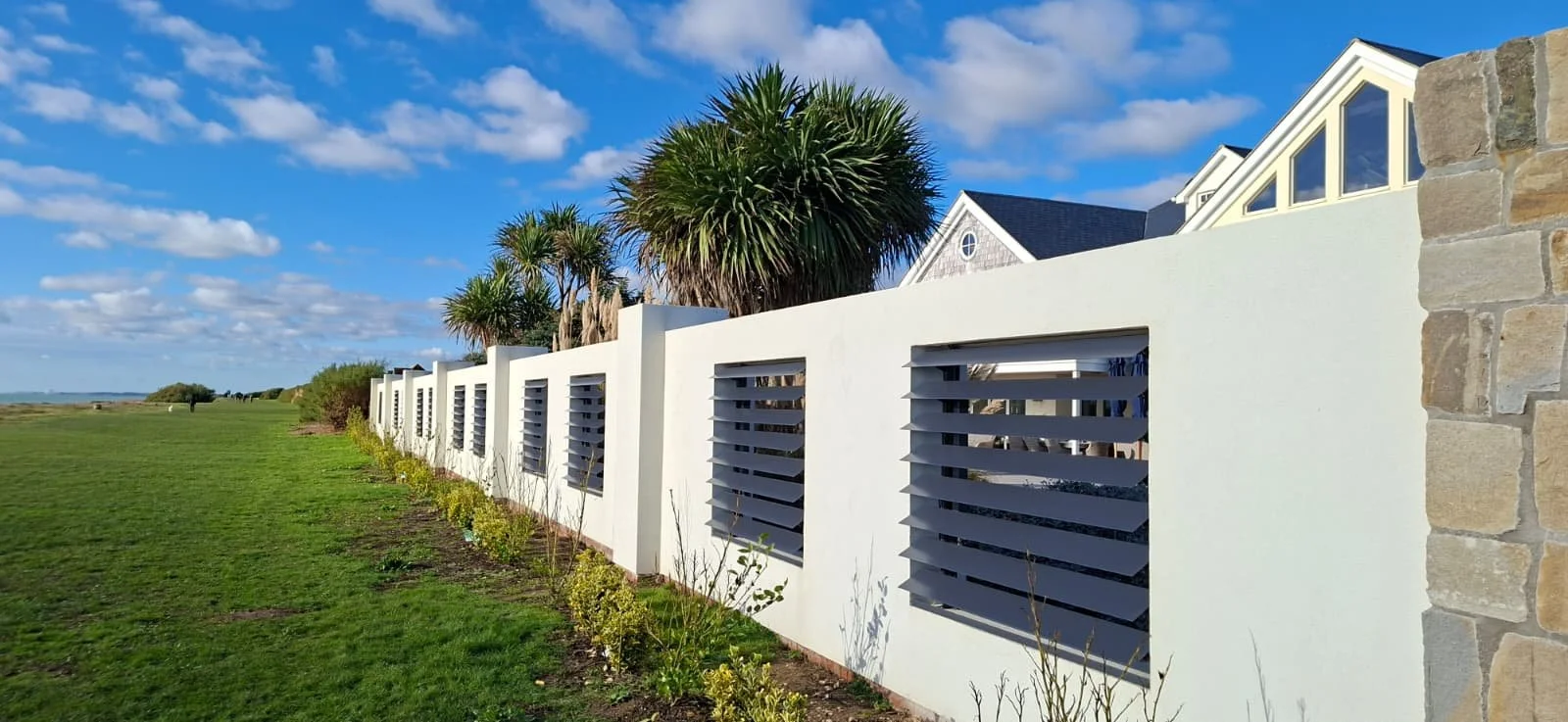
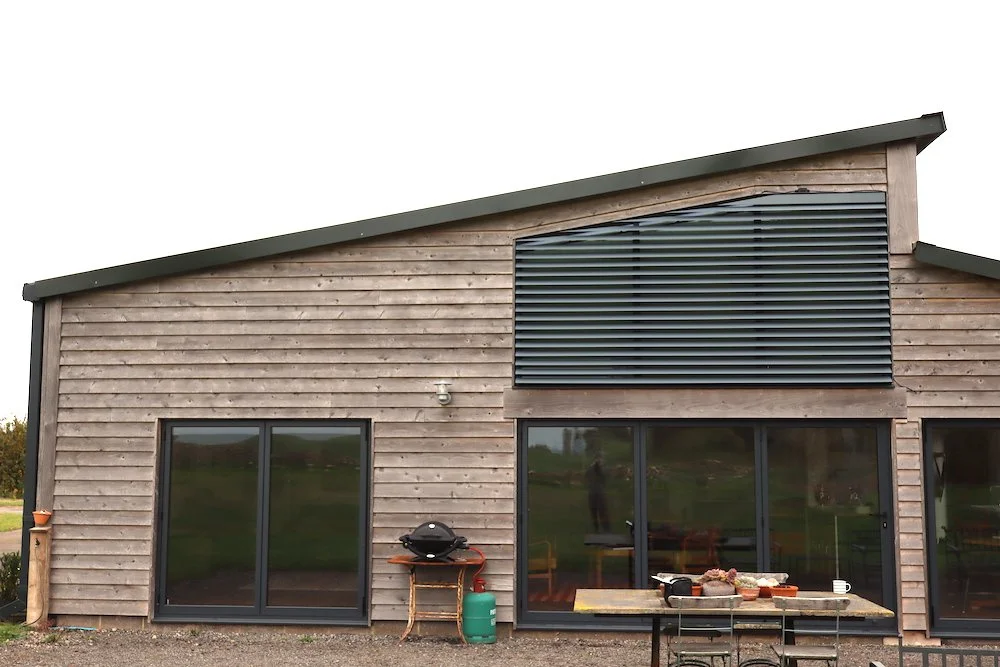
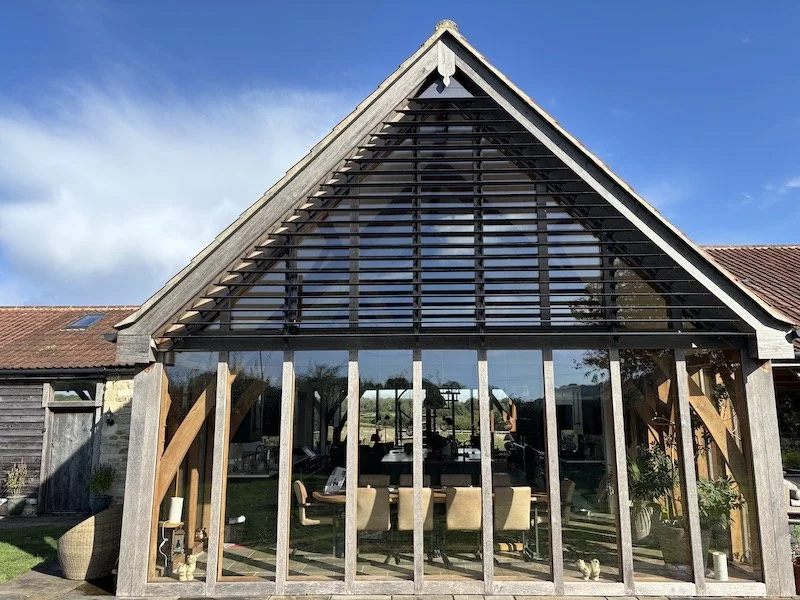
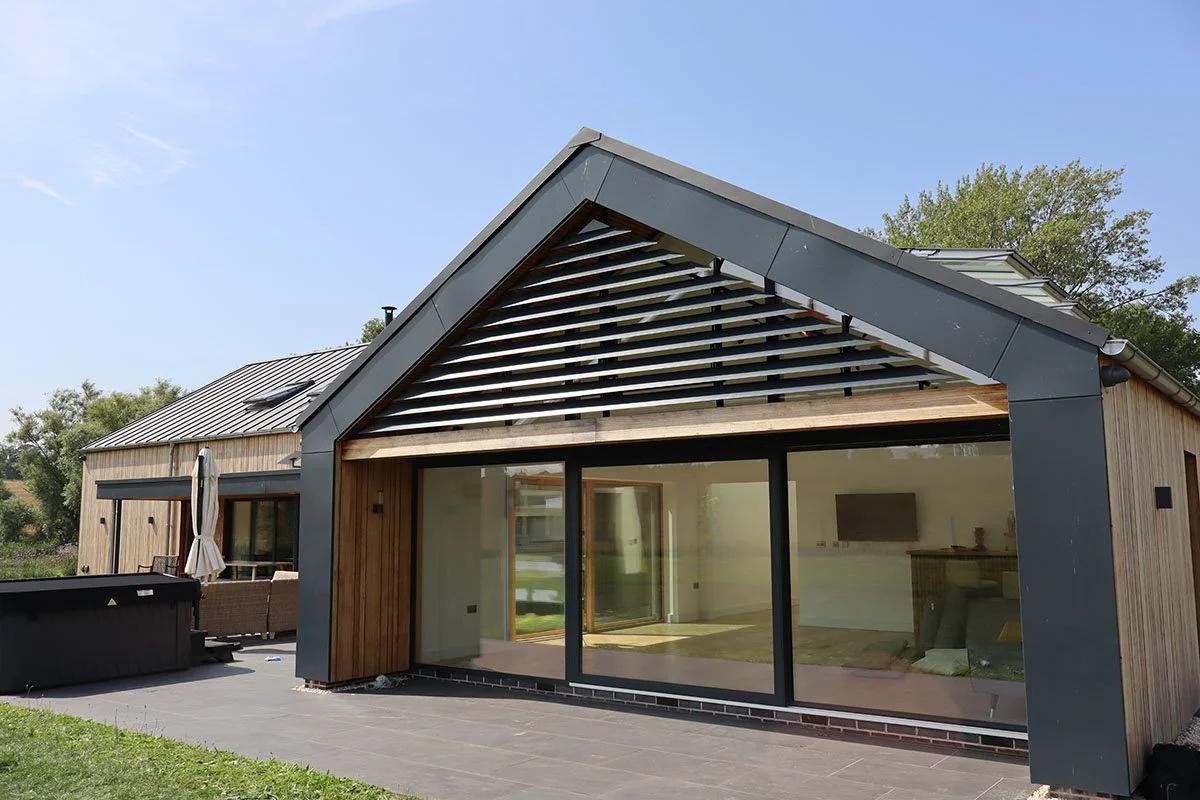
Fixed external louvres have blades that remain in a predetermined position.
The blade angle and spacing are selected during the design of the system so that the louvres provide the required level of shade, screening or architectural detail.
Because the blades do not need to be adjusted during the day, fixed louvres can provide a simple solution where the shading requirements are relatively consistent.
They can be used around:
Windows
Building façades
Balconies
Outdoor areas
Plant and equipment screens
Privacy screens
Architectural features
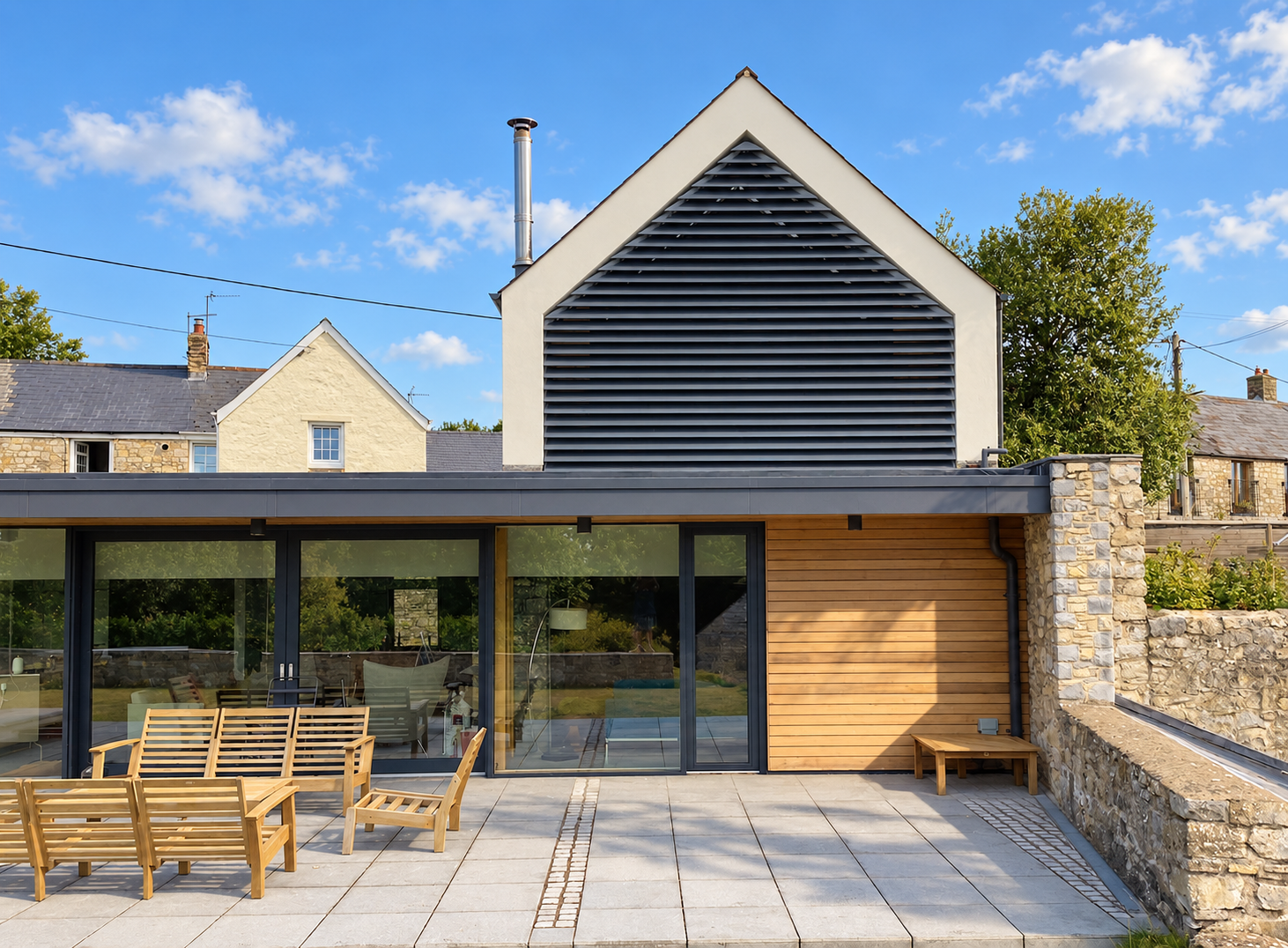
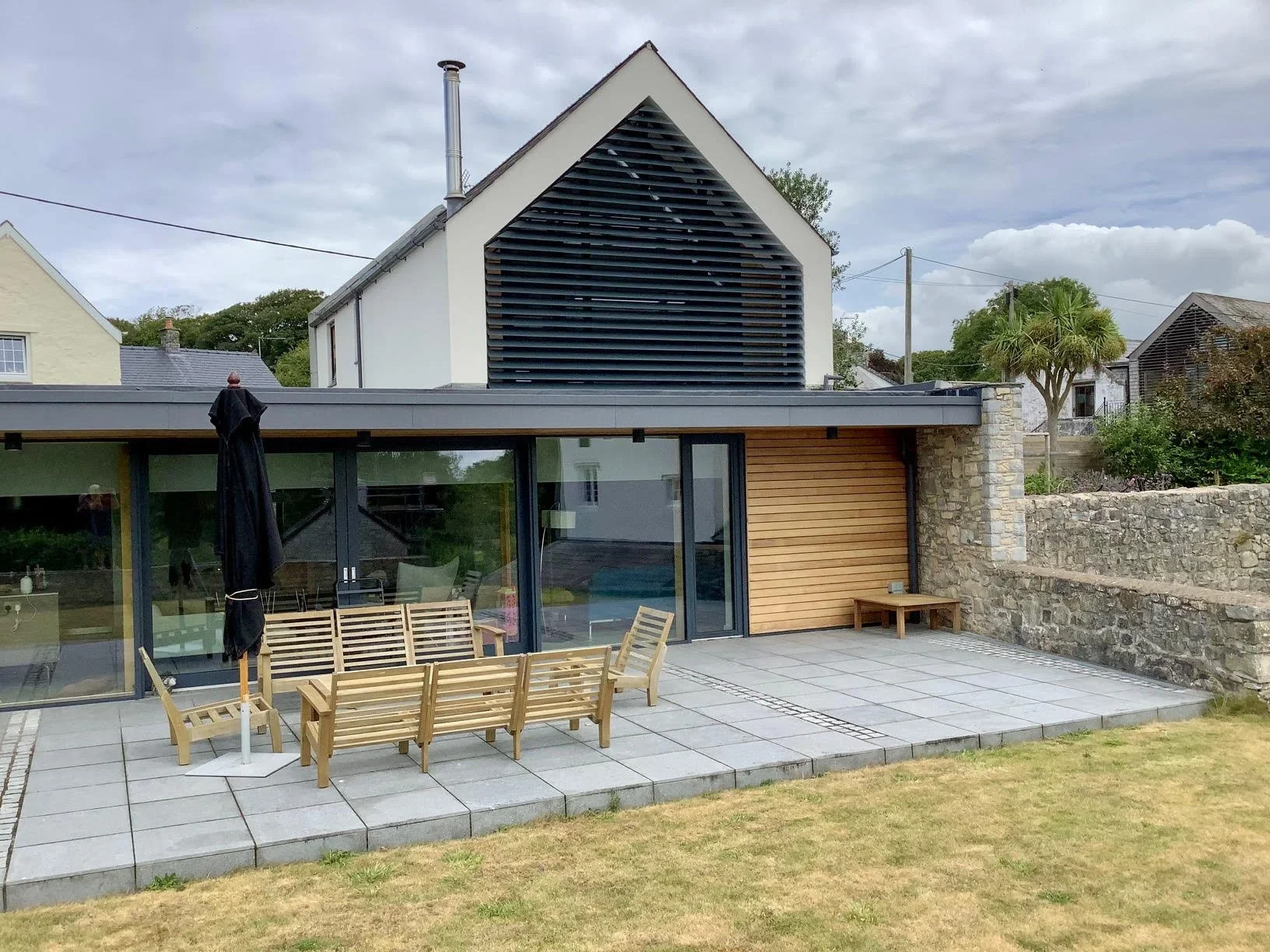
Sunshield’s external façade louvres can be made to suit different shapes and sizes of glazing.
When are fixed louvres a good choice?
Fixed louvres can work particularly well where you want a permanent level of shading or screening rather than regular adjustment.
They may be suitable where:
The primary objective is consistent solar shading
Privacy is required throughout the day
The louvres form an important part of the building design
There is no need to expose the entire window
A simple system is preferred
The sun path and required blade angle can be considered during design
They can also create strong horizontal or vertical lines across a building, making them useful where the shading system is intended to become part of the architecture.
However, because they cannot respond to changing conditions, it is particularly important that their orientation and blade position are carefully considered.
What are adjustable external louvres?

Adjustable louvres have blades that can be tilted rather than remaining permanently in one position.
This gives you much greater control over how sunlight enters the property.
Depending on conditions, the blades can be opened to maximise daylight and views or moved towards a more closed position to provide increased shading and privacy.
This can make adjustable louvres particularly useful for:
Rooms affected by overheating
Large glazed elevations
Areas where glare changes throughout the day
Windows where privacy is important
East or west-facing glazing
Living rooms and home offices
Properties where retaining the view is important
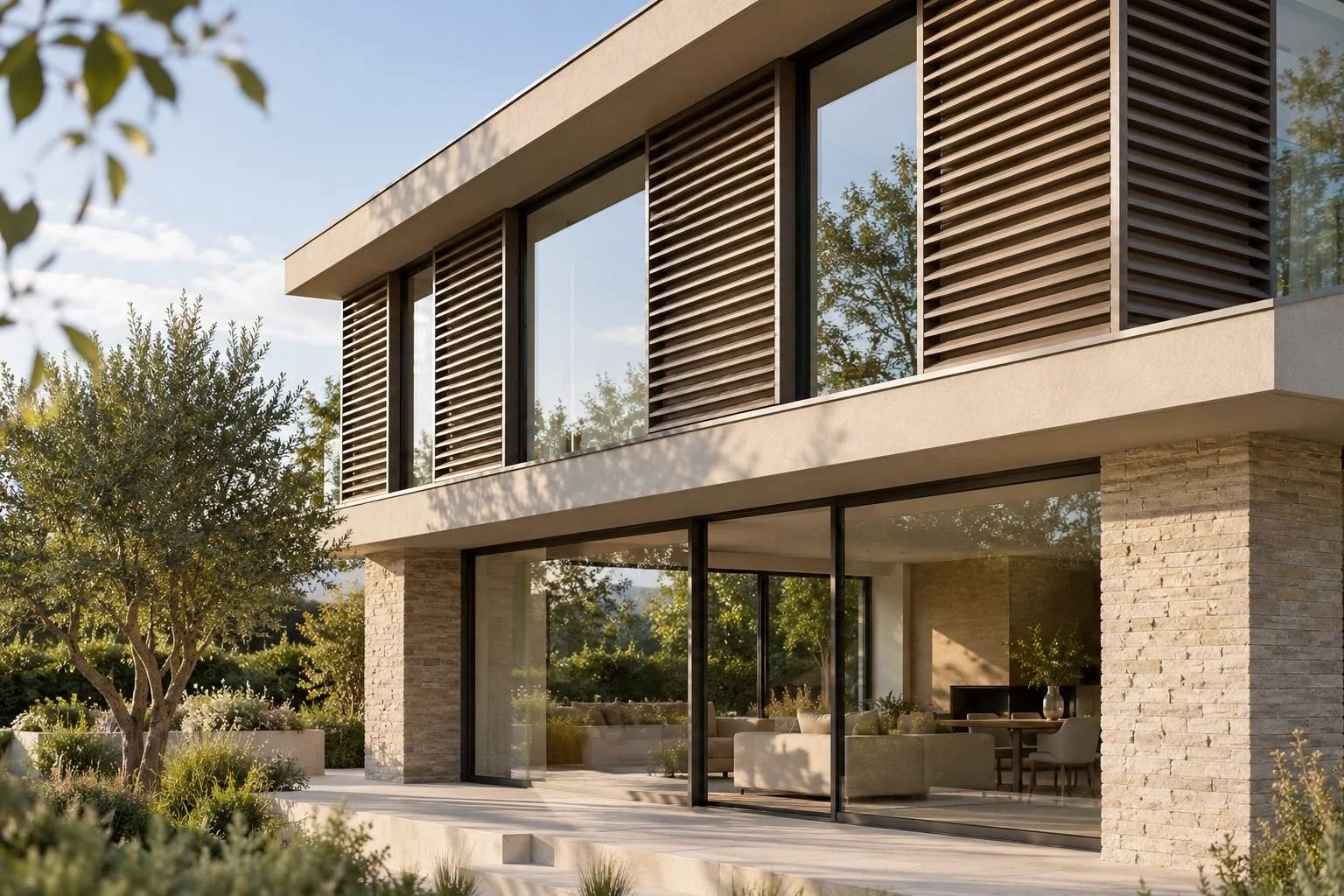
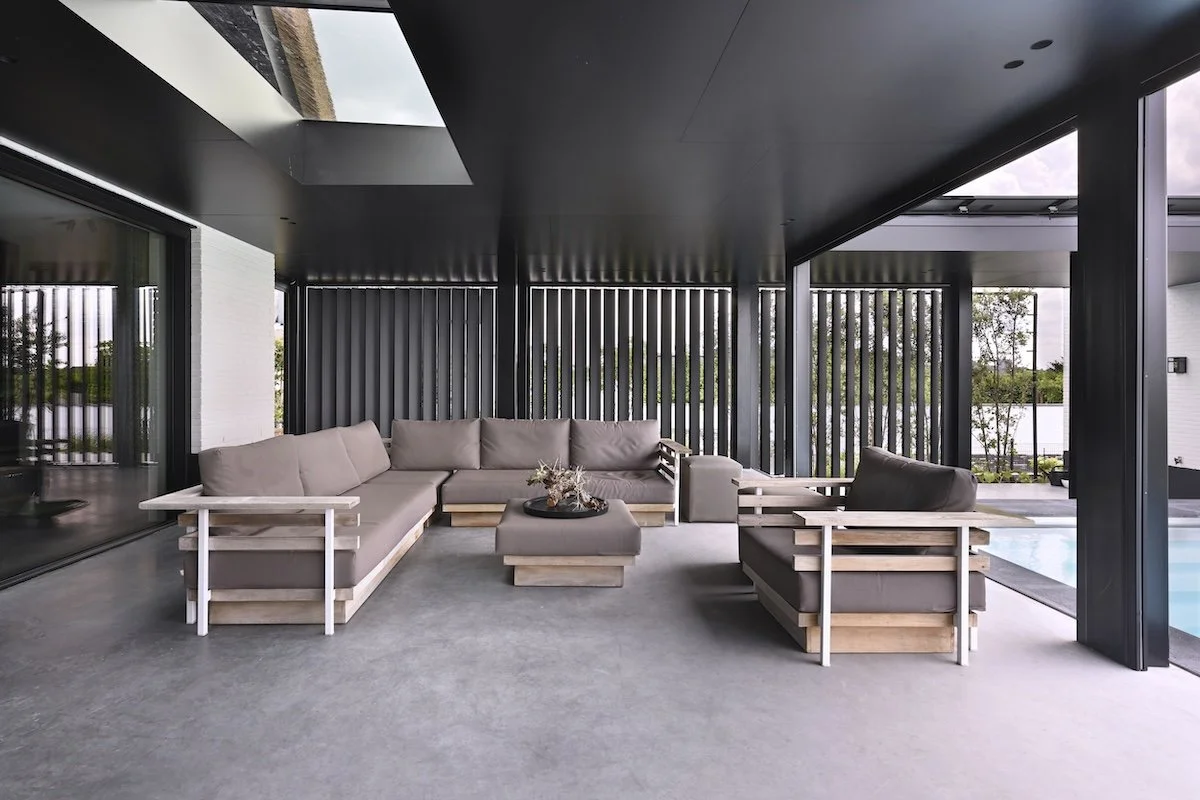
Sunshield’s vertical external louvres are one example of a system where the blade position can be adjusted to respond to changing light and privacy requirements.
Why choose adjustable louvres?
The main advantage of adjustable external louvres is flexibility.
The sun does not remain in the same position throughout the day or throughout the year. A shading position that works well on a summer afternoon may not be necessary on a cloudy winter morning.
Adjustable louvres allow the shading to respond.
They can help you balance:
Direct sunlight
Solar heat gain
Natural daylight
Glare
Privacy
Outward views
Instead of permanently blocking the window, you can change the blade angle according to the conditions.
This can be particularly valuable in rooms with large areas of glass.
If overheating is one of your main concerns, read our guide to how external louvres can help reduce heat
Are adjustable louvres good for west-facing windows?
They can be particularly useful on west-facing elevations.
West-facing windows often receive strong, lower-angle sunlight later in the day. Because the position and intensity of that sunlight changes, having the ability to alter the louvre angle can provide greater flexibility than a permanently fixed shading solution.
For a more detailed look at this particular problem, read Best External Shading for West-Facing Windows.
What are sliding louvre panels?
Sliding louvre panels are complete framed panels that move horizontally along a track.
Rather than only adjusting the blade angle, the entire panel can be moved across or away from the glazing.
This makes them particularly useful for large openings where homeowners want the option of both substantial shading and a completely open view.
Sliding panels can be used around:
Bifold doors
Sliding patio doors
Floor-to-ceiling glazing
Large windows
Balconies
Outdoor living areas
Contemporary extensions
The panels themselves may use fixed or adjustable blades depending on the chosen system.
You can see real examples in Sunshield’s sliding louvre projects.
Why choose sliding louvre panels?
The biggest advantage of a sliding system is that the shading can be repositioned across the façade.
During strong sunlight, panels can be moved in front of the glazing. When shade is no longer required, they can be moved aside.
This can provide a useful combination of:
Solar shading
Privacy
Daylight control
Flexible views
Architectural design
Sliding panels can also work particularly well with large glazed doors because they allow the shading and the opening of the building to function separately.
They can create a striking architectural feature even when they are not positioned directly in front of the glass.
Which is best for large windows?
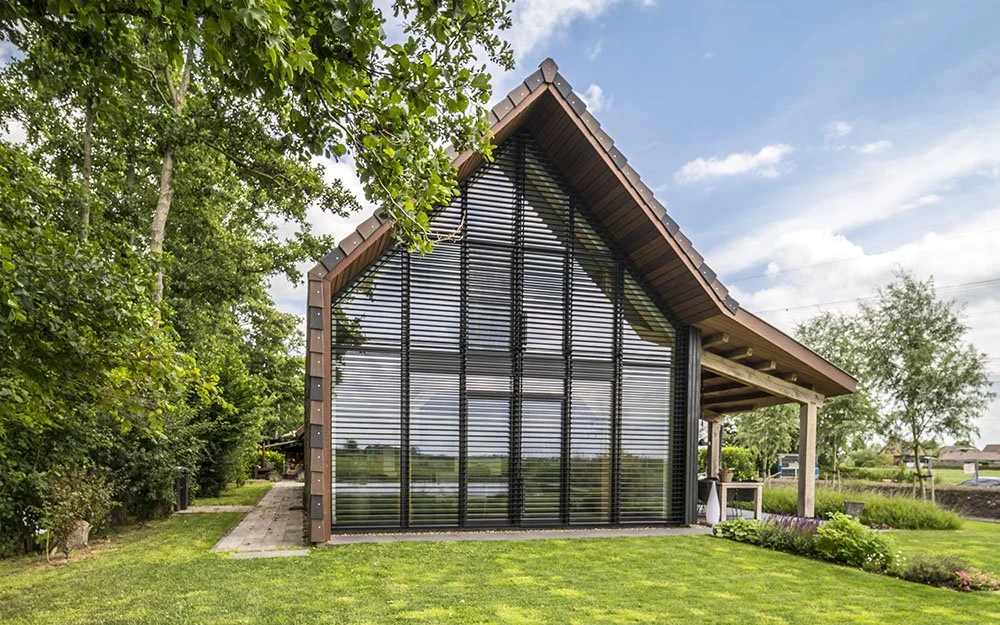
For very large windows or floor-to-ceiling glazing, adjustable louvres and sliding louvre panels are often the most flexible options.
Adjustable louvres can remain positioned in front of the glazing while allowing the blade angle to change.
Sliding panels go a step further by allowing the entire shading panel to move away from the window.
The choice will depend on how you use the space.
For example, if you want shading to remain permanently integrated into the façade but need control over sunlight, adjustable louvres may be appropriate.
If you would prefer the option of uncovering the glazing completely, sliding panels may be more suitable.
Sunshield’s external louvre range includes systems designed for large and unusually shaped areas of glazing.
Which louvres are best for bifold and sliding doors?

Sliding louvre panels are particularly useful around bifold and sliding glass doors.
Large glazed doors can introduce significant amounts of sunlight into a room, but any shading solution also needs to take into account how people move between the interior and outside.
With a sliding louvre system, panels can be positioned across the glazing when shade or privacy is required and moved aside when access or an uninterrupted view is preferred.
For some projects, adjustable blades within the sliding panels provide another level of control.
This can make them particularly suitable for:
Modern extensions
Kitchen and dining spaces
Garden rooms
Open-plan living areas
Large patio doors
Sunshield has completed a number of sliding louvre installations showing how these systems can be integrated into different styles of home.
Which option gives the most control over privacy?
Adjustable louvres generally provide the greatest control where the priority is changing levels of privacy throughout the day.
Rather than choosing between a completely open or closed screen, the blades can be angled to restrict sightlines while still allowing daylight and air through the system.
Sliding panels also provide excellent privacy because they can be positioned wherever screening is required.
Fixed louvres can provide permanent screening but offer less flexibility once installed.
The best solution therefore depends on whether you want:
Consistent privacy: fixed louvres may be sufficient.
Adjustable privacy: tiltable louvres provide greater flexibility.
Moveable privacy: sliding panels allow the screening itself to be repositioned.
This is particularly relevant where homes are overlooked or where glazing faces a road, neighbouring property or outdoor seating area.
Which type is best for controlling heat?
Any well-designed external louvre system can help manage solar heat gain by reducing the amount of direct sunlight reaching the glazing.
However, adjustable systems provide the additional ability to respond to changing conditions.
For example, the blades can provide stronger shading during a hot sunny afternoon and then be opened when direct sunlight has passed.
Sliding systems provide similar flexibility because panels can be moved into position only when required.
The performance of any shading solution will depend on more than whether it is fixed or adjustable. Other factors include:
Building orientation
Window size
Type of glazing
Blade angle
Blade size and spacing
Position of the louvres
Time of day
Time of year
Our guide Do External Louvres Really Reduce Heat? explains how external shading manages solar gain in more detail.
Which option is best for maintaining the view?
If preserving views is particularly important, adjustable louvres are often a good option because the blade angle can be changed.
Rather than completely covering the window, the blades can be positioned to manage sunlight while maintaining visibility between them.
Sliding panels offer another solution because the entire panel can be moved away when shading is not required.
The right design therefore depends on whether you prefer a shading system that remains in place or one that can move completely away from the glazing.
Blade profile can also affect visibility.
Take a look at Sunshield’s louvre types to compare the different aluminium and Western Red Cedar profiles available.
Should I choose aluminium or timber louvres?
Fixed, adjustable and sliding systems can be designed in different materials depending on the application.
Sunshield offers both high-grade extruded aluminium and Western Red Cedar across its external louvre range. Explore Sunshield louvre types.
Aluminium louvres
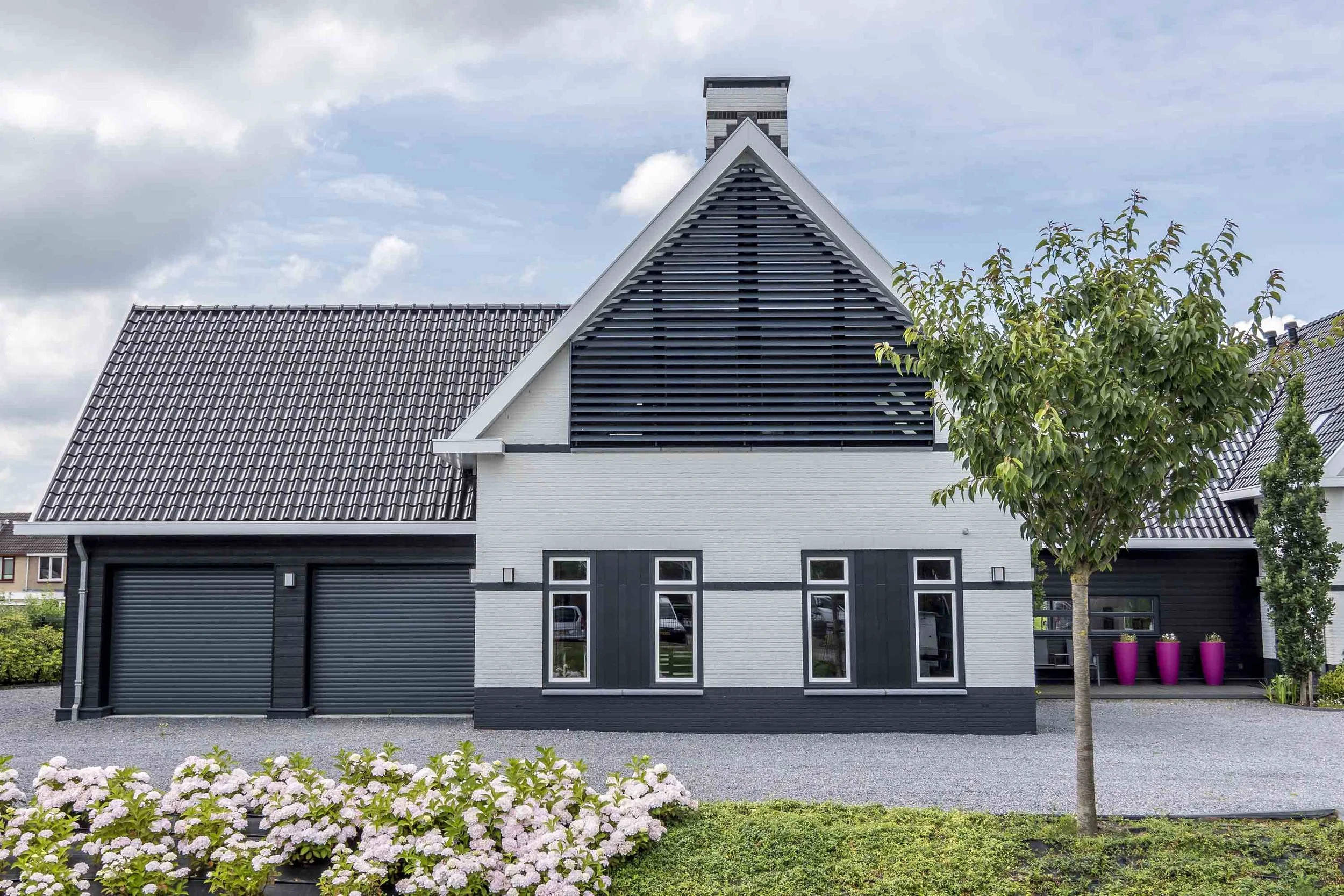
Aluminium can provide:
A clean contemporary appearance
Low maintenance requirements
A choice of finishes and colours
Durability for exterior applications
A strong architectural finish
Timber louvres
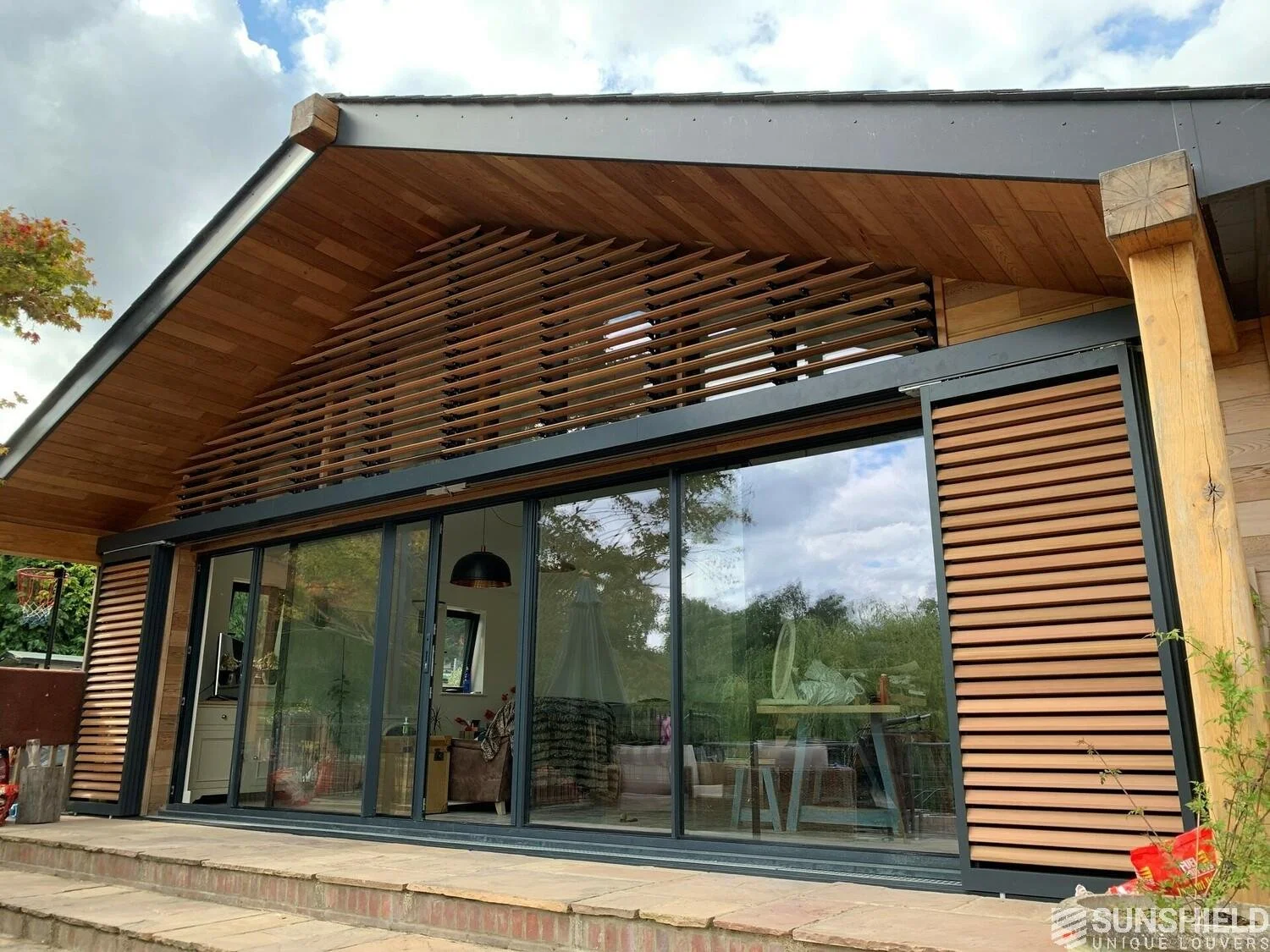
Western Red Cedar can provide:
A warmer natural appearance
Natural variation in tone and grain
A softer contrast against modern glazing
An architectural finish suited to both contemporary and traditional properties
The choice does not necessarily determine whether the system should be fixed, adjustable or sliding. Material, operation and blade profile should all be considered together.
Manual or motorised adjustable louvres?
Where a louvre system is adjustable, another consideration is how you want to operate it.
Manual adjustment can work well for accessible systems that do not need to be moved regularly.
Motorised operation can be more convenient where:
The louvres are large
The system is positioned high on the building
Adjustments are likely to be made regularly
Several louvre sections are installed
Easy everyday control is important
The right option will depend on the size and design of the installation as well as how you expect to use it.
Which type of louvre costs more?
There is no simple answer because the cost of an external louvre system is affected by the complete design.
A quotation may be influenced by:
Size of the installation
Number of panels
Material
Blade profile
Fixed or adjustable operation
Manual or motorised controls
Track systems
Surface finishes
Building structure
Access for installation
Project complexity
A simple fixed installation may involve fewer moving components than a large motorised adjustable or sliding system, but every project is different.
Rather than choosing based on system type alone, it is better to identify what the shading needs to achieve and then compare appropriate solutions.
For a full explanation, read How Much Do External Louvres Cost?
Can different types of louvres be used on the same property?
Yes.
A property does not necessarily need to use the same type of shading everywhere.
Different elevations can experience very different sunlight conditions, while different rooms may have different requirements for views, privacy and access.
For example, a project might use:
Adjustable louvres across a large west-facing window
Sliding panels around patio doors
Fixed screening elsewhere on the façade
The aim should be to choose the solution around each part of the building rather than assuming one system needs to perform every role.
Should external louvres be planned during a new build?
Where possible, yes.
External louvres can be retrofitted to existing properties, but considering the system during the design of a new build or extension can make it easier to coordinate:
Fixing locations
Structural support
Electrical supplies
Sliding tracks
Recessed details
Cladding
Window positions
Access for installation
It can also give the architect greater freedom to incorporate the shading into the overall appearance of the building.
Browse Sunshield’s completed projects for examples of how external louvres have been incorporated into new builds, extensions and existing properties.
How do I decide which external louvre system I need?
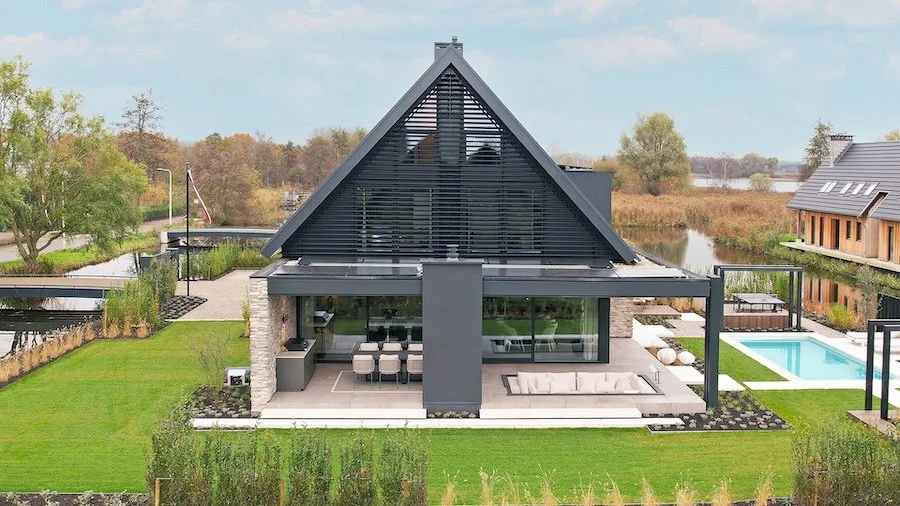
Start with the problem you are trying to solve rather than the product itself.
Ask yourself:
Is overheating the main concern?
Do I need greater privacy?
Do I want to reduce glare?
Is preserving the view important?
Do the louvres need to move completely out of the way?
Is the glazing particularly large or unusually shaped?
Will I want to adjust the shading throughout the day?
Would manual or motorised operation be more practical?
Is the system mainly functional, architectural, or both?
You do not need to know exactly which product you require before contacting Sunshield.
Photos, approximate dimensions and details about how the area is used can help the team recommend a suitable approach.
Fixed, adjustable or sliding louvres: which should you choose?
As a general guide:
Choose fixed louvres if you want consistent shading, screening or an architectural feature without the need for regular adjustment.
Choose adjustable louvres if you want greater control over sunlight, heat, glare, views and privacy throughout the day.
Choose sliding louvre panels if you have large areas of glazing or doors and want the option of moving the shading completely across or away from the opening.
For more complex projects, a combination of systems may provide the best solution.
Frequently Asked Questions
-
Fixed louvres remain at a set blade angle, providing consistent shade or screening. Adjustable louvres allow the blades to tilt, giving greater control over sunlight, glare, privacy and views.
-
Not always. Adjustable louvres provide more flexibility, but fixed louvres can be a simple and effective choice where consistent shading or screening is required. The best option depends on the building and how the space is used.
-
Sliding louvre panels are particularly suited to large windows, bifold doors, sliding doors and floor-to-ceiling glazing. The complete panel can move across or away from the glazing as shading or privacy requirements change.
-
Depending on the chosen system, sliding louvre panels can incorporate adjustable blades, giving control over both the position of the panel and the angle of the louvres.
-
Yes. External louvre systems can be made to measure for large and unusually shaped areas of glazing. The most suitable configuration will depend on the dimensions, orientation and structure of the building.
-
Yes. Sunshield offers external louvre systems in high-grade extruded aluminium and Western Red Cedar, with different blade profiles and finishes available.
-
Yes. Different elevations can receive sunlight at different angles and times of day, so it can make sense to use different shading solutions around the same property.
-
Yes. External louvres can be installed on existing properties as well as incorporated into new builds and extensions. The available fixing locations, access and building construction will need to be considered.
Find the right external louvres for your property
Choosing between fixed, adjustable and sliding external louvres is ultimately about understanding how you want the building to respond to sunlight, heat, privacy and views.
Sunshield designs made-to-measure external louvre systems for homes and architectural projects across the UK, with options for different glazing sizes, building styles and shading requirements.
Contact Sunshield to discuss your project and find the most suitable external louvre system for your property.
Our Projects: